Think back to the golden era of going to the movies. Before the studio logos even appeared, the lights would dim, and you were hit with that iconic, thunderous sonic identity. Whether it was the sweeping metallic clang of the Dolby Digital spinning animation or the classic deep hum of THX shaking the floorboards, sound wasn't just background noise—it was an event.
So, what happened to Dolby? Did they vanish into the digital ether?
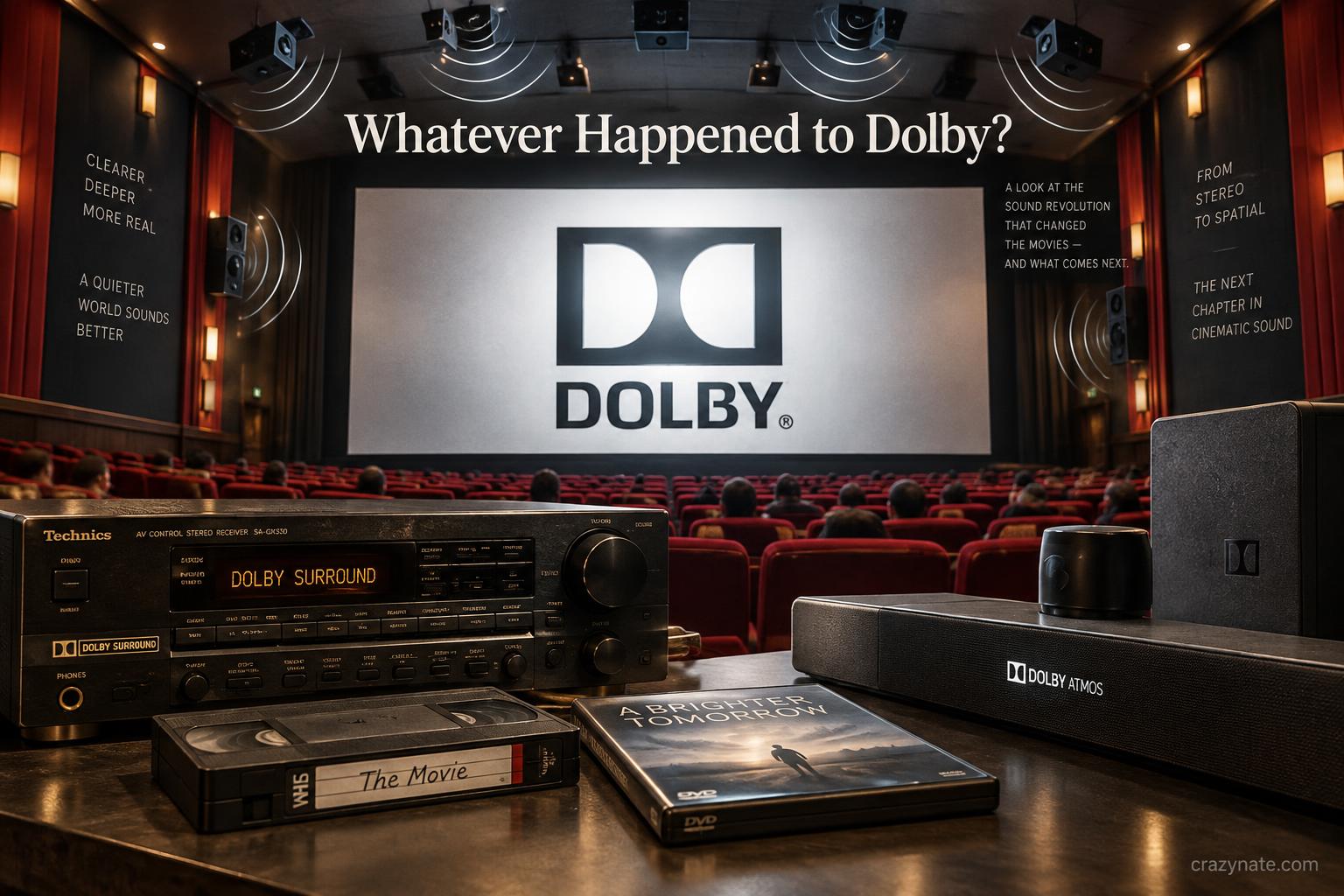
The short answer is no. Dolby didn’t disappear at all; they actually won the war. But along the way, they underwent a massive evolution that took them out of the spinning logo intros on VHS tapes and deeply into the invisible infrastructure of modern entertainment.
The Kings of Analog Noise Reduction
To understand where Dolby is today, you have to look at where they started. Founded by Ray Dolby in 1965, the company originally made its name by solving a very specific analog problem: tape hiss. Their noise-reduction systems revolutionized music recording and cassette tapes in the 1970s.
From there, Dolby made the leap to the big screen. When Star Wars hit theaters in 1977, Dolby Stereo changed how audio was mixed and delivered in auditoriums. Throughout the 80s and 90s, seeing the Dolby logo meant you were about to experience discrete multi-channel surround sound that separated dialogue to the center speaker, ambient effects to the sides, and a low-end rumble to the subwoofer. They became the undisputed gold standard of cinematic audio.
The Transition to the Living Room
As physical media shifted from VHS to DVD and Blu-ray, Dolby made the crucial pivot into home entertainment. Dolby Digital (AC-3) became the mandatory audio codec for DVDs, cementing their hardware and software dominance in millions of living room surround-sound receivers.
However, this is also when the branding started to change. The famous cinematic intros—the spinning metal logos and the booming sonic cues—started fading from mainstream cultural saturation. Because Dolby technology became a built-in standard for almost every television, streaming stick, and smartphone, consumers stopped having to "look" for the logo. It was simply baked into everything.
Dolby Today: Atmos and Cinema Dominance
Far from fading away, Dolby spent the 2010s and 2020s engineering the next revolution in sound: Dolby Atmos.
Instead of routing audio to fixed speaker channels (like 5.1 or 7.1 surround sound), Atmos treats sounds as individual "objects" that can be placed anywhere in a three-dimensional space—including overhead. If a helicopter flies across the screen in a modern blockbuster, the audio mixer can literally steer that sound through ceiling-mounted speakers above your head.
Furthermore, Dolby expanded into high-end visual tech with Dolby Vision, an advanced HDR format that pushes contrast, brightness, and color accuracy past standard high-dynamic-range limits. Today, high-end commercial theaters proudly brand themselves as "Dolby Cinema," combining customized recliner seating, room-shaking Atmos audio, and dual-laser projection that competes directly with IMAX.
Why It Feels Like They Disappeared
Dolby vanished from cultural prominence only in the sense that they won. When a technology becomes so ubiquitous that it powers your phone speakers, your living room soundbar, your Netflix stream, and your local multiplex without a second thought, it stops being a novelty and becomes part of the atmosphere.
They may not rely on the flashing spinning intros of the 90s quite as much, but the next time you sit down to watch a modern epic and feel a sound wave physically move across the room, Dolby is still running the show.

Comments
Loading...
Want to chat more? Join the conversation in our Discord